
Press Kit
“Lady Justice” killer is on death row but abusers still turning up dead in bestselling author’s pivot to adult fiction
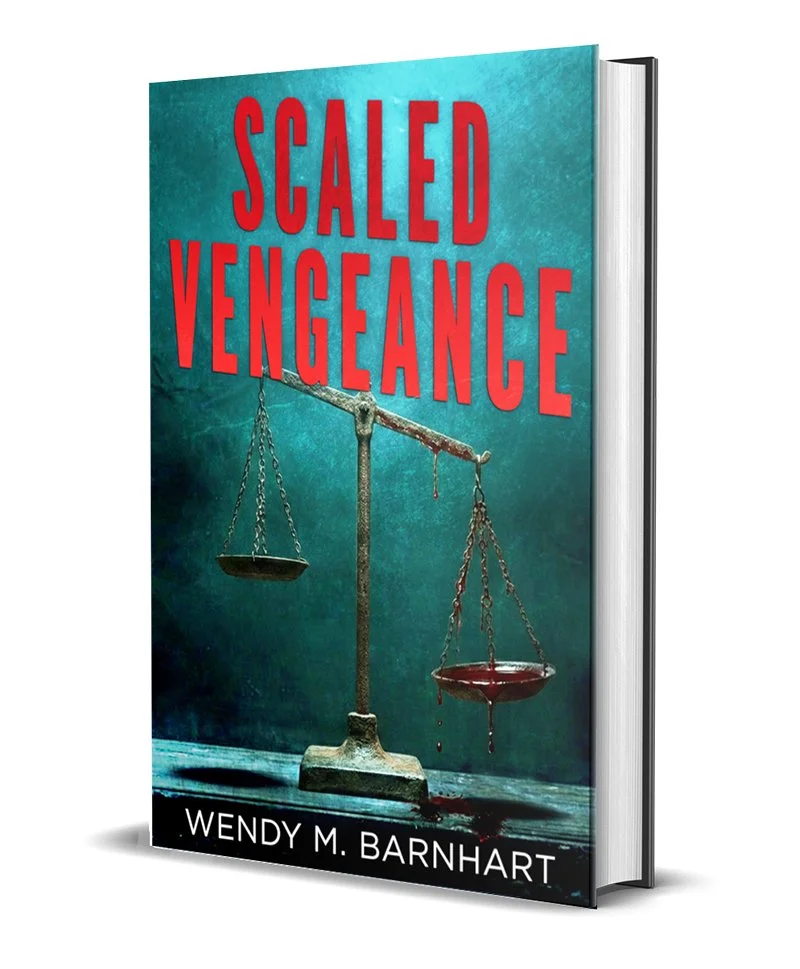
Denver — After writing a bestselling YA urban fantasy series, “Dateline” aficionado and author Wendy M. Barnhart is pivoting to adult fiction with her unnerving first thriller: “Scaled Vengeance,” (Nov. 10, 2026, Camashea Press).
Cassidy Vickers suspected the “Scales Killer” was a woman, and she was right. As a true crime podcast host, she was obsessed with serial killers, especially when brutal abusers started turning up dead with scales drawn and carved upon them. But after the killer’s capture, Vickers retreated to a quiet life as a reporter, wife, and mother — until now. Convicted of nine murders, Scales Killer and former #vanlife influencer Emerson Kemp, rechristened “Lady Justice,” is weeks away from execution. But brutal abusers are dying again, and Kemp’s signature icon of uneven scales mark the murders. After Kemp reenters Vickers’ life through a podcast livestream, Vickers is drawn into the case, accused of collusion, and even murder by an outraged public. Can Cassidy find the truth? Or will darker secrets leave her world in ruin?
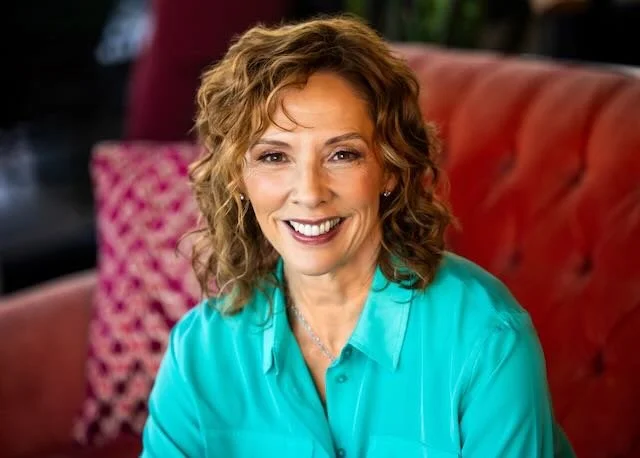
International bestselling author, Wendy M. Barnhart, received her first library card at age two, and a few years later started writing her own stories.
Her debut novel, “The Rampart Guards,” earned a Kirkus starred review and was named to Kirkus Reviews’ Best Books of 2016. Wendy graduated from the University of Utah and relocated to Colorado where she completed her MBA at the University of Denver. She is on the board of Rocky Mountain Fiction Writers, and is a member of Pikes Peak Writers, the Colorado Authors League, and the Authors Guild. Wendy lives in the Denver area and is a proud dog mom. She is also committed to promoting pet adoption from rescues or shelters.
-
International bestselling author Wendy M. Barnhart (formerly Terrien) received her first library card at age two, and soon started writing her own stories. Scaled Vengeance (November 2026) is her first thriller. Her debut novel, The Rampart Guards (February 2016), earned a Kirkus starred review and was named to Kirkus Reviews' Best Books of 2016. Next in the series, all award winners, are The League of Governors (August 2017), The Clan Calling (August 2017), and The Forge of Bonds (February 2020) which received the Colorado Authors League Award of Excellence.
Wendy graduated from the University of Utah (go Utes!) and moved to Colorado where she completed her MBA at the University of Denver. She focused her marketing expertise on the financial and cybersecurity industries until a career coach stepped in and reminded Wendy of her passion for writing. Inspired, Wendy attended writers' conferences, workshops, and retreats, and the storytelling hasn't stopped since.
Wendy serves on the board of Rocky Mountain Fiction Writers, and is a member of the Colorado Authors League, the Authors Guild, and Sisters in Crime. She lives in the Denver area and is a proud dog mom. She's team dark chocolate, a Dateline aficionado, and believes every dose of nature nurtures the soul. Wendy is also committed to promoting pet adoption from rescues or shelters as the best way to bring home a furry family member. If you're in Colorado, you may even spot her "Adopt a Shelter Pet" license plates.
Learn more about Wendy by visiting her website: wendymbarnhart.com
An Interview with Wendy M. Barnhart
1. What led you to transition from writing YA to writing thrillers?
I love reading thrillers and mysteries and always wanted to challenge myself to write one. But the idea was daunting! The twists, the turns, the tension, the clues, putting it all together so it makes sense but doesn’t give much away too early – it’s a lot. I knew it would be hard, especially since I hadn’t done it before. But then something odd happened that made me ponder why such things happen in life, which sparked other ideas, and then I knew it was time to take the leap. What was the “something odd happened,” you might ask? I was on a Zoom call with a group of people from all over the U.S. who were sharing stories about their current works-in-progress. One woman said she was writing a novel from a rapist’s point of view, that she herself had been a victim of rape, that she wanted to interview a convicted rapist as part of the research for her character, so she arranged to meet with one at a prison. And then she shared that she and this convicted rapist were now dating. I was stunned. And perplexed. And I hoped I was controlling my facial expressions on camera. But I couldn’t stop thinking about her situation and the choices she’d made. Which is not to say “Scaled Vengeance” has a woman dating a convicted rapist; it does not. It’s just that the experience of listening to her tell her story was a catalyst to me thinking about a million things that led me to “Scaled Vengeance.”
2. What were some of the challenges pivoting to a different genre?
Were there things you found that came easier? Discomfort was probably the number one challenge for me. I was pretty comfortable with my urban fantasy world where I knew the characters, the setting, the history, etc. Writing “Scaled Vengeance” meant not only did I have a new-to-me genre with its own expectations, but I also had a new world to build and new characters to create who knew how to operate in this genre. It felt similar to writing my first novel because I had so much to learn as I wrote. It stretched my brain in the best way.
3. You wrote “Scaled Vengeance" while going through major personal transition and family turmoil. Can you describe how you found the creative energy to write?
Honestly, I rarely found the creative energy to write. For a time, it was a minute to minute kind of existence, waiting for the worst to be over. While it was hard to find creative energy in the midst of that, the research I needed to do for this new world was a gift. It enabled me to put myself somewhere else without the “create” element, which would have required more energy. I welcomed those rabbit holes. And as the turmoil lessened, the creativity flowed and I had a solid foundation ready to go.
4. You claim to have seen just about every “Dateline” episode — and even have loose personal connections with three storylines on the show. How did this inform the writing process for this book?
This is total speculation here, but I think “Dateline” has provided everyone who watches it regularly with a light education on the basic elements of a crime scene, a dead body, the investigative process and so forth. By no means am I claiming any expertise because I’ve watched a lot of “Dateline,” but I certainly know more about murder investigations than I did pre-“Dateline.” They’re also good at leading the viewer down one “this is the bad guy” path, then throwing in twists that make us wonder. And it feels great when the murderer is sent to prison, and it’s a bummer when no one is convicted. Injustice hits hard with me. I definitely wield some of those feelings in “Scaled Vengeance.”
5. What do you think is compelling in this moment about female rage?
First let me say, the term is a little tricky for me in that the “rage” here isn’t the dictionary definition of “violent, uncontrollable anger.” To me, this is controlled anger that is being harnessed rather than repressed. Many women are done with the imbalance, with the lesser opportunities, with the expectations that we should and will settle for second (or third, or fourth) tier, and accept abuse in all its forms. No, no, and no. And why now? We’re talking about it. We have social media now that connects us. We can call out the injustice. We are able to unite to do what’s right rather than live in “just the way it is and it’s always been this way.” Now, we see each other, and we know right from wrong. And how can we possibly respect ourselves if we accept wrong over right? I’ve lived that, and it was dark and debilitating. No one should live in a situation or a world where they are not treated with respect and value.
6. Why do you think the true crime genre resonates with so many people, but especially with women?
I don’t know the exact percentage, but women are so often the victims in these shows — that alone obviously makes the scenarios they cover relatable. And given we’re taught to be vigilant and aware and prepared for danger since we’re young, maybe watching justice be served is reassuring in some way? For me, watching “Dateline” is interesting because of everything I’ve learned over the years. Not only the crimes and how they’re committed or solved, but also how the justice system works (or doesn’t work … see “Scaled Vengeance”), what investigators are legally allowed to do, like lying to suspects, or how polygraph tests really are crap, for the most part. There’s so much more than “bad guy does crime, good guys solve crime, bad guy goes to jail.” There are a lot of layers.
7. What’s next for your writing career?
I have one more book to write in my urban fantasy series, and I’ll wrap that up in 2027. And maybe there will be more books from the “Scaled Vengeance” universe; there are a lot of characters I would like to spend more time with and see where it takes me. Regardless, I do want to write more in the thriller genre. I love the challenge of weaving everything together with plenty of twists and turns.